
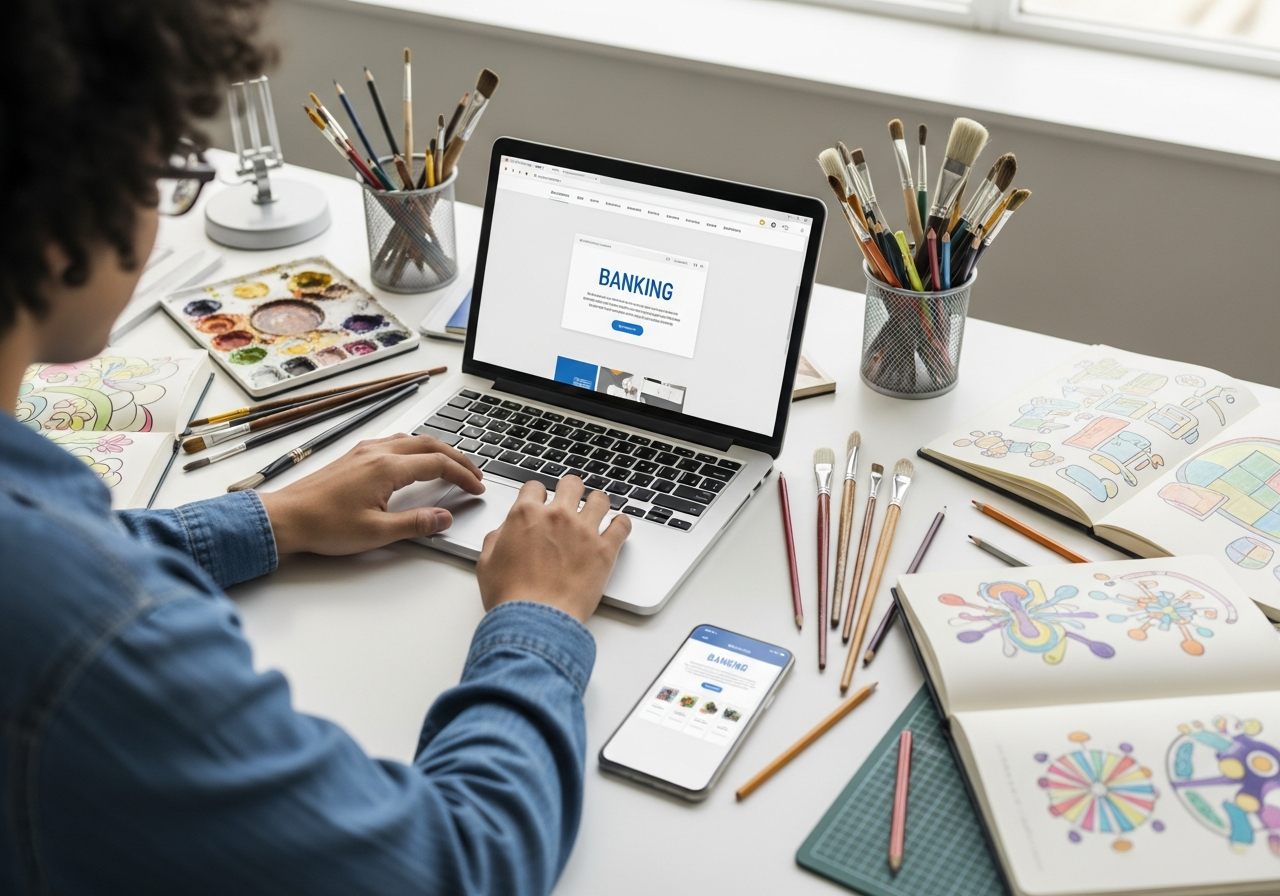
Navigating Banking Fees for International Creative Students
Maya, a film student from India, arrived in Toronto last September with dreams of studying cinematography at OCAD University. Within her first month, she was shocked to discover that her Canadian bank account had charged her $47 in various fees – from ATM withdrawals to foreign exchange costs for her Adobe Creative Suite subscription. For international creative students like Maya, navigating Canadian banking fees becomes particularly challenging due to the unique financial demands of creative fields: irregular income from freelance projects, frequent small transactions for art supplies, and ongoing subscriptions for creative software.
This comprehensive guide addresses the specific banking challenges faced by international students in creative disciplines, offering practical strategies to minimize fees while managing the unpredictable cash flow that defines creative careers. We’ll explore student-specific account options, decode fee structures across major Canadian banks, and provide actionable tactics for reducing costs on everything from international tuition payments to receiving payment for your first commissioned artwork.
How Canadian Student Banking Works for International Creatives
Canadian banks offer three primary account types that international creative students should understand: chequing accounts for daily transactions, savings accounts for emergency funds and project savings, and specialized international student packages that often combine both. Chequing accounts typically handle your day-to-day expenses like rent, groceries, and art supplies, while offering features like debit cards and online banking. Savings accounts provide higher interest rates but limit transaction frequency – ideal for setting aside money for major equipment purchases or emergency funds.
Most major Canadian banks offer $0 monthly fee options specifically for students, but these promotions often come with conditions like maintaining minimum balances or limiting monthly transactions. Beyond monthly fees, you’ll encounter charges for ATM usage outside your bank’s network, foreign exchange fees on international transactions, and overdraft protection fees. International student packages frequently include perks like waived wire transfer fees for tuition payments, extended banking hours, and multilingual customer support.
For creative students, understanding these account types becomes crucial because your financial patterns differ significantly from traditional students. You might receive irregular payments from commissioned work, make frequent small purchases for project materials, or need to transfer money internationally for film festival submissions or art exhibitions.
Chequing, Savings and International Student Accounts Explained
Chequing accounts serve as your financial hub, offering unlimited daily transactions, debit card access, and online banking features essential for managing creative projects. These accounts typically include services like Interac e-Transfers for receiving client payments, bill payment options for studio rent, and mobile banking apps for tracking expenses between gigs. International student chequing packages often waive monthly fees for the first year and include additional transaction allowances.
Savings accounts complement your chequing account by offering higher interest rates on funds you don’t need immediately. For creative students, these accounts work well for building emergency funds or saving for major equipment purchases like cameras, computers, or art supplies. Many banks offer automatic transfer services between chequing and savings, helping you build savings habits even with irregular income patterns.
International student account packages bundle chequing and savings accounts with additional perks tailored to newcomers. These often include waived international wire transfer fees for tuition payments, extended promotional periods with no monthly fees, and access to specialized newcomer banking advisors who understand visa requirements and international payment challenges.
Why Banking Fees Matter Extra for Creative Students
Creative students face tighter budget constraints than many other disciplines, juggling tuition costs with expensive project materials, software subscriptions, and unpredictable income streams. A film student might spend $200 monthly on software subscriptions, $300 on equipment rentals, and receive $500 in irregular freelance payments – making every banking fee more impactful. When you’re already stretching funds between canvas costs and camera equipment, a $5 ATM fee or $2.50 foreign transaction fee can derail your monthly budget.
Consider the cumulative impact: using an out-of-network ATM twice weekly costs $520 annually, while foreign transaction fees on software subscriptions can add $180 per year. For a student managing a $15,000 annual budget, these seemingly small fees consume nearly 5% of available funds. Creative students also face unique fee challenges, such as currency exchange costs when selling artwork internationally or receiving payments through platforms like PayPal or Stripe.
The irregular income patterns common in creative fields amplify fee impacts further. When you receive a $1,000 commission payment but won’t see another paycheck for six weeks, overdraft fees or insufficient fund charges can create cascading financial problems that affect your ability to complete coursework or maintain your student status.
Core Canadian Banking Fees You Need to Watch
Understanding the fee landscape helps international creative students budget effectively and choose banking products that align with their unique spending patterns. These core fees can significantly impact students managing tight budgets while pursuing expensive creative disciplines.
Each fee category affects creative students differently based on their transaction patterns, international connections, and project-based income streams. Monitoring these charges becomes essential for maintaining financial stability throughout your studies.
- Monthly account maintenance fees ($4-15) – Most student accounts waive these initially, but fees resume after promotional periods end, typically ranging from $10.95 to $16.95 monthly for standard accounts
- ATM fees ($1.50-5.00 per transaction) – Using non-network ATMs costs $1.50-3.00 from your bank plus $2-5 from the ATM owner, particularly expensive for creative students making frequent small cash purchases for supplies
- Foreign exchange fees (2.5% of transaction value) – Applied to international purchases including software subscriptions, online course materials, and art supplies ordered from international vendors
- International wire transfer fees ($15-50) – Essential for tuition payments or receiving funds from family abroad, with incoming wires typically costing $15-17 and outgoing transfers ranging from $25-50
- Overdraft and NSF fees ($45-48 per occurrence) – Particularly problematic for creative students with irregular income, these fees apply when transactions exceed available balances
- Interac e-Transfer fees ($1.00-1.50) – Important for creative students receiving client payments or splitting project costs with collaborators, though many student accounts include monthly allowances
- Currency conversion fees (2.5-4%) – Beyond standard FX fees, additional conversion charges apply when receiving payments in foreign currencies through freelance platforms
Hidden or Overlooked Fees That Catch International Students
Beyond the obvious monthly and transaction fees, several charges frequently surprise international creative students during their first year in Canada. These fees often appear on statements without clear explanations, making them particularly frustrating for students already managing tight budgets. Understanding these charges helps you plan more effectively and avoid unexpected expenses that could affect your ability to complete creative projects.
Many of these fees stem from banking habits that worked fine in your home country but trigger charges in the Canadian banking system. International students often discover these costs only after they appear on monthly statements, making proactive awareness essential for effective budget management.
- Card replacement fees ($5-10) – Charged when you lose or damage your debit card, avoid by using mobile banking apps as your primary payment method when possible and keeping cards in protective cases
- Statement fees ($2-5 monthly) – Applied for paper statements or detailed transaction records, circumvent by opting for electronic statements and using mobile banking apps to track transactions
- Dormant account fees ($25-50) – Triggered when accounts show no activity for extended periods, prevent by setting up small automatic transfers between accounts or making minimal transactions monthly
- Stop payment fees ($12.50-25) – Charged when canceling checks or pre-authorized payments, avoid by carefully managing payment authorizations and communicating with vendors before stopping payments
- Account research fees ($25-30 per hour) – Applied when requesting transaction histories beyond standard periods, minimize by maintaining personal financial records and downloading monthly statements regularly
- Expedited service charges ($25-40) – Added for rush processing of wires, drafts, or account changes, avoid by planning international transfers and account modifications well in advance of deadlines
Comparing Major Canadian Banks for International Students
Choosing the right bank significantly impacts your financial experience as an international creative student in Canada. Each major bank offers distinct advantages and limitations for students managing irregular income streams and creative project expenses. This comparison focuses on practical features that matter most to international students in creative fields, including fee structures, accessibility, and specialized services.
The banking landscape for international students has become increasingly competitive, with banks offering enhanced digital services and specialized newcomer programs. However, promotional offers can obscure long-term costs, making it essential to look beyond initial incentives to understand ongoing fee structures and service quality.
When evaluating options, consider both your immediate needs as a new international student and your evolving requirements as you establish yourself in Canada’s creative industries. The best choice balances low fees with practical features that support your unique financial patterns as a creative professional in training.
| Bank | Flagship International/Student Account | Monthly Fee for Students | Transaction Allowance | Key Perks for International Students | Notes for Creative Students |
|---|---|---|---|---|---|
| RBC | Advantage Banking for Students | $0 for 12 months, then $10.95 | 25 debit transactions monthly | Free incoming wires, multilingual support, pre-arrival account opening | Strong digital banking platform for tracking project expenses, extensive ATM network |
| TD | International Student Bank Account Package | $0 for 12 months, then $16.95 | Unlimited transactions | No-fee international money transfers, waived safety deposit box | Unlimited transactions ideal for frequent creative supply purchases |
| Scotiabank | StartRight for Students | $0 for 12 months, then $11.95 | Unlimited Interac debit transactions | Scene+ rewards program, free Interac e-Transfers | Scene+ rewards beneficial for entertainment expenses and creative inspiration |
| CIBC | Smart for Students | $0 for 12 months, then $12.95 | Unlimited transactions | Free Interac e-Transfers, overdraft protection options | Overdraft protection valuable for managing irregular creative income |
| BMO | Smart Advantage for Students | $0 for 60 months during studies | Unlimited transactions | Extended student pricing, newcomer support programs | Longest fee waiver period supports multi-year creative programs |
| Tangerine | Chequing Account | $0 always | Unlimited transactions | No monthly fees ever, high-interest savings options | Digital-only banking suits tech-savvy creative students, limited ATM network |
How to Read Bank Promos Without Getting Distracted
Canadian banks frequently promote attractive sign-up bonuses and extended fee-waiver periods for international students, but these short-term incentives shouldn’t overshadow long-term banking costs and service quality. A $300 sign-up bonus might seem appealing, but if the account charges $16.95 monthly after the promotional period ends, you’ll pay back that bonus within 18 months. Focus on the underlying account features, transaction limits, and ongoing fee structures that will impact your finances throughout your studies.
Promotional periods typically last 12 months, though some banks offer extended benefits for up to 60 months during active student status. Read the fine print carefully to understand what happens when promotional pricing expires, including monthly fees, transaction limits, and minimum balance requirements. Many students discover that maintaining the promotional benefits requires meeting specific conditions like maintaining minimum balances that may be unrealistic for creative students with irregular income.
When evaluating promotional offers, calculate the true cost of banking over your expected study period, including post-graduation transition periods when you might not immediately secure steady employment. The most generous promotional offers often come from banks with higher regular fees, making them less attractive for students planning extended stays in Canada or those pursuing creative careers with initially modest incomes.
Regional and Online-Only Banks: Are They Worth It for Creatives?
Online-only banks like Tangerine and Koodo offer permanently fee-free banking that appeals to budget-conscious creative students, but their limited physical presence can create challenges for services requiring in-person assistance. These digital banks excel at basic transactions, mobile banking, and competitive interest rates, making them suitable for students comfortable managing finances entirely through apps and websites. However, international students might struggle with services like notarized documents, safety deposit boxes, or complex international transfers that require branch visits.
Regional banks and credit unions often provide more personalized service and competitive rates for local students, but their limited ATM networks and reduced digital banking capabilities might frustrate creative students who frequently travel for projects, exhibitions, or film shoots. Credit unions particularly shine for students planning to remain in specific provinces long-term, offering lower fees and community-focused services, but their limited geographic reach becomes problematic for mobile creative careers.
For creative students, the optimal approach often involves combining online banks for daily transactions and fee-free banking with major banks for specialized services like international transfers, letters of credit, or equipment financing. This hybrid strategy maximizes fee savings while maintaining access to comprehensive banking services essential for international students and emerging creative professionals.
Account Features That Save (or Cost) You Money
Smart account feature selection can significantly reduce banking costs for international creative students while supporting the unique financial demands of creative careers. Understanding which features provide genuine value versus marketing-driven add-ons helps you make informed decisions that protect your budget while enabling your creative pursuits.
The key lies in matching account features to your specific usage patterns as a creative student – frequent small transactions for art supplies, irregular income from commissions, international payments for software subscriptions, and the need for flexible payment options when working with clients and collaborators.
Some features that seem expensive initially can save substantial money over time, while others marketed as “free” might hide costs in other fee categories. Evaluating features based on your actual creative workflows helps optimize your banking setup for both immediate savings and long-term financial efficiency.
- Unlimited Interac e-Transfers – Saves $1.50 per transfer for creative students frequently receiving client payments or splitting project costs, worth $180+ annually for active freelancers
- No-fee international wire transfers – Eliminates $25-50 charges for tuition payments or receiving funds from family abroad, saving $300+ yearly for students making quarterly payments
- Overdraft protection with reasonable fees – Protects against $48 NSF charges when managing irregular creative income, though $5 daily overdraft fees can accumulate quickly if overused
- ATM fee rebates – Reimburses non-network ATM charges up to monthly limits, valuable for students who travel frequently for creative projects or exhibitions
- Currency exchange rate discounts – Reduces foreign transaction fees from 2.5% to 1.25% or lower, saving creative students $100+ annually on software subscriptions and international purchases
- Free additional services – Includes safety deposit boxes for storing valuable equipment or artwork, notary services for legal documents, and certified checks for major purchases
- Mobile deposit and budgeting tools – Enables remote check deposits for freelance payments and expense tracking for creative projects, reducing trips to branches and improving financial management
Credit Cards and FX Fees for Creative Tools and Travel
Credit cards serve as essential tools for international creative students, providing security for online purchases, building Canadian credit history, and offering foreign exchange savings on international transactions. However, choosing the wrong card can result in expensive annual fees and high foreign transaction charges that quickly erode any benefits. Creative students particularly benefit from cards that minimize currency conversion fees, since much creative software, online education, and professional tools involve international merchants.
Student credit cards typically offer lower credit limits and fewer rewards but include educational benefits like financial literacy resources and fraud protection for online purchases. Many cards marketed to students waive annual fees initially but implement charges after graduation, making it important to understand long-term costs before committing to specific products.
The foreign exchange landscape significantly impacts creative students who subscribe to international software services, purchase supplies from global vendors, or travel for creative opportunities. Cards with no foreign transaction fees can save creative students $200-400 annually compared to standard cards charging 2.5% on international purchases.
Building credit history in Canada requires careful card usage, including maintaining low balances, making payments on time, and avoiding cash advances that often carry high fees and immediate interest charges. For international students, establishing credit history enables access to better banking products, apartment rentals, and eventually equipment financing for professional creative tools.
| Card Type | Annual Fee | Foreign Transaction Fee | Best Use Case for Creative Students | Risks to Watch |
|---|---|---|---|---|
| Basic Student Card | $0-29 annually | 2.5% | Building credit history, domestic purchases | High FX fees on software subscriptions |
| No-FX Student Card | $0-50 annually | 0% | International software, online courses, travel | Limited availability, may require established credit |
| Secured Card | $59-99 annually | 2.5% | Building credit with no credit history | Requires security deposit, typically $500-1000 |
| Travel Rewards Card | $120-150 annually | 0-2.5% | Film festivals, art exhibitions, research travel | High annual fees may exceed benefits for students |
| Cash Back Card | $0-79 annually | 2.5% | Art supplies, equipment, everyday expenses | Lower rewards rates on specialized creative purchases |
| Store-Specific Card | $0 typically | 2.5% | Regular purchases at specific art supply stores | Limited usefulness, often high interest rates |
| Premium Student Card | $99-199 annually | 0-1.25% | Comprehensive benefits for active creative careers | High fees require significant spending to justify |
Practical Fee-Cutting Strategies for Day-to-Day Student Life
Reducing banking fees requires systematic approaches that align with creative students’ unique financial patterns and spending behaviors. These strategies focus on practical, implementable changes that can save international creative students hundreds of dollars annually without compromising their ability to manage creative projects or maintain their lifestyle.
The most effective fee-cutting approaches combine technology utilization, strategic account management, and behavioral changes that become automatic over time. By focusing on the highest-impact fee categories first, creative students can achieve substantial savings while building sustainable financial habits that support long-term success in creative careers.
Success depends on understanding your specific banking patterns and choosing strategies that match your creative workflow, income predictability, and technology comfort level. Small changes in daily banking habits compound over months and years, creating significant savings that can be redirected toward creative development, equipment purchases, or emergency funds.
- Consolidate ATM usage to your bank’s network locations – Plan weekly cash needs and withdraw larger amounts less frequently, saving $10-20 monthly in ATM fees while using branch locators to identify fee-free locations near your campus and studio spaces
- Set up automatic transfers to avoid minimum balance fees – Schedule small weekly transfers between accounts to maintain activity and minimum balances, preventing dormancy charges and monthly fees while building emergency savings automatically
- Use mobile banking apps for all routine transactions – Eliminate paper statement fees, reduce branch visits, and monitor account balances in real-time to prevent overdraft charges while tracking creative project expenses more effectively
- Batch international payments and purchases – Combine multiple foreign currency needs into single transactions to minimize per-transaction fees, particularly effective for software subscriptions, online courses, and art supply orders from international vendors
- Negotiate fee waivers based on account relationships – Request fee reductions when maintaining multiple accounts or meeting transaction volume thresholds, particularly effective during account anniversary dates or when experiencing financial hardship as a student
- Time large transactions strategically – Schedule major payments like tuition during promotional periods or when account balances are highest to avoid overdraft protection fees while maximizing available promotional benefits
- Maintain detailed expense tracking – Document all banking fees to identify patterns and negotiate with customer service for fee reversals, particularly effective for disputing unexpected charges or fees resulting from bank errors
Studio, Equipment and Subscription Payments With Minimal Fees
Creative students face unique payment challenges when managing studio rentals, equipment purchases, and ongoing software subscriptions that can trigger multiple fee categories if not handled strategically. Batching subscription payments to occur on the same date monthly reduces foreign exchange variability and enables better budget planning, while paying for annual subscriptions instead of monthly plans often eliminates per-transaction fees entirely. Many creative software companies offer educational discounts that more than offset the foreign exchange fees, making annual payments a smart financial strategy.
Equipment purchases require careful timing and payment method selection to minimize fees while maximizing purchase protection. Using credit cards with extended warranties and purchase protection for expensive equipment like cameras, computers, or art supplies provides additional security beyond what bank accounts offer. However, paying credit card balances immediately prevents interest charges while maintaining the protective benefits. For major equipment purchases, some banks offer special financing products for students that provide better terms than credit cards.
Studio and workspace payments often require certified funds or electronic transfers that can incur significant fees if not planned properly. Establishing relationships with landlords or studio managers who accept e-Transfers instead of certified checks can save $5-15 per monthly payment, while setting up automatic payments often qualifies for rental discounts that exceed banking fee costs.
Budgeting Around Tuition, Rent and Creative Projects
Creative students’ irregular income patterns require budgeting strategies that accommodate unpredictable payment schedules while ensuring essential expenses like tuition and rent are covered without triggering expensive overdraft or insufficient fund fees. Creating separate savings accounts for major expenses allows you to set aside money during profitable periods to cover fixed costs during lean months. Many banks offer automatic savings programs that transfer small amounts weekly, helping build reserves without impacting daily cash flow.
Project-based budgeting requires understanding the full cost cycle of creative work, including upfront material costs, ongoing expenses during creation, and the delayed payment typical in creative industries. Building project budgets that include banking fees for client payments, international supply purchases, and equipment rentals prevents fee-related cost overruns that can eliminate project profitability. Some creative students find success opening separate accounts for each major project, clearly separating expenses and income while simplifying tax preparation.
Tuition payment timing significantly impacts banking fees, particularly for international students managing currency exchange costs. Planning tuition payments during favorable exchange rate periods and using accounts or services with reduced foreign exchange fees can save hundreds of dollars per semester. Some banks offer special tuition payment services with reduced fees, while others provide foreign exchange rate alerts that help time large payments optimally.
Cross-Border Payments, FX and Getting Paid for Creative Work
International creative students navigate complex payment scenarios that traditional banking advice rarely addresses, from receiving freelance payments in foreign currencies to managing tuition transfers and family financial support across borders. Understanding the various payment methods available and their associated costs enables informed decisions that can save hundreds of dollars annually while ensuring reliable access to funds for education and creative projects.
Currency exchange rates and foreign transaction fees significantly impact creative students who frequently engage with international markets, software providers, and educational platforms. The difference between efficient and inefficient cross-border payment strategies can mean the difference between affording necessary creative tools and struggling to maintain basic educational resources.
Each payment scenario requires different optimization strategies based on amount, urgency, frequency, and the relationship between sender and recipient. Mastering these options provides creative students with flexible financial tools that support both their education and emerging professional activities.
| Scenario | Common Method (Wire, e-Transfer, Card, GIC, RTP) | Typical Fees/FX Costs | Lower-Fee Alternative | Best Practice for Students |
|---|---|---|---|---|
| Tuition Payment | International Wire Transfer | $25-50 + 2.5% FX markup | Specialized education payment services | Compare university-recommended services vs bank rates |
| Receiving Family Support | Incoming Wire Transfer | $15-25 + FX spread | Digital money transfer services | Set up regular transfers to qualify for volume discounts |
| Freelance Client Payment | PayPal or Interac e-Transfer | 2.9% + $0.30 (PayPal), $1.50 (e-Transfer) | Direct bank transfer for large amounts | Build payment terms into project pricing |
| Software Subscriptions | Credit Card Auto-pay | 2.5% foreign transaction fee | No-FX credit card or annual prepayment | Group subscriptions with classmates when possible |
| International Art Supply Purchase | Credit Card | 2.5% FX + potential duty/taxes | Multi-currency debit card or local suppliers | Calculate total landed costs including fees and duties |
| Film Festival Entry Fees | Credit Card | 2.5% FX fee on international entries | Batch multiple entries to minimize per-transaction costs | Research student discounts and early-bird pricing |
| Travel for Creative Projects | Travel Credit Card | 0-2.5% FX + ATM fees abroad | Prepaid travel cards or partner bank ATMs | Research destination banking partnerships before travel |
| Selling Art Internationally | PayPal or Stripe | 2.9-3.4% + FX conversion fees | Direct bank transfers for high-value sales | Factor payment processing costs into pricing strategy |
Handling Freelance and Commission Income as a Student
Managing freelance income as an international creative student requires understanding both banking efficiency and tax implications, since irregular payments can trigger unnecessary fees while creating reporting requirements for both Canadian and home country tax authorities. Establishing separate accounts for business income helps track earnings and expenses while potentially qualifying for business banking products with more favorable fee structures. Many banks offer student business accounts with reduced fees, though these require careful evaluation to ensure the benefits outweigh the costs.
Payment timing strategies become crucial when managing project-based income alongside fixed student expenses like tuition and rent. Building relationships with clients who can accommodate your preferred payment methods saves money on transaction fees while improving cash flow predictability. For larger commissions, negotiating payment schedules that align with your expense cycles can prevent the need for expensive overdraft protection or high-interest credit card advances during gaps between payments.
International freelance work introduces additional complexity through currency exchange considerations and cross-border tax reporting requirements. Maintaining detailed records of all international income and related banking fees supports accurate tax filing while helping identify opportunities to optimize payment methods and timing for future projects.
- Set up dedicated freelance banking accounts – Separate business and personal income to simplify tax reporting while potentially accessing business banking products with better fee structures for frequent deposits and transfers
- Negotiate payment terms that minimize fees – Request clients use payment methods that reduce your costs, such as e-Transfers for Canadian clients or direct bank transfers for large international projects instead of payment processors with percentage-based fees
- Build fee costs into project pricing – Include banking and payment processing costs in your quotes to maintain profitability, typically adding 3-5% to cover various transaction fees and currency conversion costs
- Batch small payments when possible – Encourage clients to consolidate multiple small payments into larger, less frequent transfers to reduce per-transaction costs and simplify record-keeping for tax purposes
- Maintain detailed income and expense records – Track all banking fees related to freelance income for tax deduction purposes while monitoring patterns that could be optimized through different payment strategies
- Consider multi-currency accounts for regular international work – Hold foreign currency earnings to time conversions strategically and reduce currency exchange costs, particularly valuable for ongoing relationships with international clients
Opening Your First Canadian Account as an International Creative Student
The account opening process for international students involves specific documentation requirements and strategic decisions that impact your banking experience throughout your studies. Most major Canadian banks allow pre-arrival account opening for accepted students, enabling you to establish banking relationships and receive your debit card before arriving in Canada. This advance planning prevents the challenges of managing initial expenses with limited banking access while providing time to research and compare options without the pressure of immediate needs.
Required documentation typically includes your passport, study permit (or acceptance letter for pre-arrival applications), proof of Canadian address, and initial deposit funds. Some banks require additional documents like proof of tuition payment or financial support letters, particularly for accounts with enhanced benefits or higher credit limits. Understanding these requirements in advance prevents delays that could complicate your transition to Canadian academic life.
The timing of your account opening affects promotional benefits and fee structures, with many banks offering enhanced incentives during back-to-school periods or when opening accounts before specific deadlines. However, focusing solely on promotional offers without considering long-term account features can lead to expensive banking relationships once introductory periods expire.
Step-by-Step: From Research to First Transaction
Successfully opening your first Canadian bank account requires systematic preparation that begins months before your arrival and continues through your first semester as you optimize your banking setup based on actual usage patterns. This process involves multiple checkpoints to ensure you’re minimizing fees while meeting all requirements for international student banking.
Each step in the account opening process presents opportunities to negotiate better terms or identify potential fee-saving strategies, making thorough preparation essential for long-term banking success as a creative student.
- Research and compare bank offerings 2-3 months before arrival – Use bank websites and international student resources to understand account features, fee structures, and promotional offers while noting specific benefits for creative students like art supply financing or international payment services
- Contact banks directly to confirm international student eligibility – Speak with newcomer banking specialists to understand documentation requirements, pre-arrival options, and any special programs for students from your home country that might not be advertised online
- Prepare required documentation and initial deposits – Gather passports, study permits, acceptance letters, and proof of address while determining optimal initial deposit amounts that meet minimum requirements without straining your transition budget
- Schedule appointments for account opening within first week of arrival – Book appointments at 2-3 different banks to compare actual offerings with promotional materials while ensuring you have banking access established before classes begin
- Review account agreements carefully before signing – Read all fee schedules, transaction limits, and promotional terms to understand exactly what you’re committing to, particularly noting when promotional rates expire and what standard fees will apply
- Set up online banking and mobile apps immediately – Configure digital banking access during your appointment to avoid potential delays while testing all features you’ll need for managing creative project expenses and international transactions
- Make initial deposits and test key features within first month – Verify that international transfers work correctly, understand how to avoid common fees, and confirm that your account setup matches your actual usage patterns as a creative student
Avoiding Common Mistakes in Your First Semester
New international students frequently encounter preventable banking problems during their first semester that can cost hundreds in fees and create unnecessary financial stress during an already challenging transition period. Understanding these common pitfalls helps creative students establish sustainable banking habits that support their educational goals while minimizing unnecessary costs. Many mistakes stem from assumptions about how Canadian banking works based on systems in students’ home countries, making it essential to understand local banking culture and fee structures.
The most expensive mistakes often involve fees that accumulate gradually, making them less noticeable until monthly statements reveal significant costs. International creative students particularly struggle with currency exchange timing, payment method selection, and understanding the true costs of different banking services. Preventing these mistakes requires active account monitoring and strategic planning rather than reactive fee management.
First-semester banking challenges compound because international students are simultaneously learning new academic systems, cultural norms, and practical life skills while establishing their creative practices in a new environment. Simplifying banking decisions through advance planning and systematic approaches reduces overall stress while protecting limited financial resources.
Advanced Optimization: Stacking Accounts, Apps and Rewards
Sophisticated banking strategies can significantly enhance financial efficiency for international creative students who have mastered basic account management and understand their spending patterns. These advanced approaches involve coordinating multiple financial products, leveraging technology tools, and maximizing reward programs while carefully managing the increased complexity that comes with multi-account strategies.
Advanced optimization requires careful cost-benefit analysis since complex banking setups can introduce new fees and management overhead that might outweigh their advantages for students with limited time and relatively simple financial needs. The key lies in implementing only those strategies that provide clear, measurable benefits while maintaining systems simple enough to manage alongside demanding creative coursework.
Success with advanced banking strategies depends on consistent monitoring and periodic optimization as your financial situation evolves throughout your studies and early career development. What works during your first year might need adjustment as your income increases, your credit history develops, and your banking needs become more sophisticated.
| Strategy | How It Works | Main Benefit | Key Risk or Drawback |
|---|---|---|---|
| Multi-Bank Strategy | Maintain accounts at 2-3 banks for different purposes | Optimize each account for specific needs and fee structures | Increased complexity and potential for minimum balance requirements |
| Credit Card Stacking | Use multiple cards for different purchase categories | Maximize rewards and minimize foreign exchange fees | Risk of overspending and complex payment management |
| Automated Savings Transfers | Schedule transfers to high-interest savings during income periods | Build emergency funds while earning interest on idle money | May trigger fees if transfers occur when balances are low |
| Rewards Program Optimization | Align spending with specific reward categories and bonus periods | Earn significant rewards on necessary creative expenses | May encourage unnecessary spending to maximize rewards |
| Business Account Integration | Separate freelance income through student business banking | Better expense tracking and potential tax advantages | Additional monthly fees and more complex record-keeping requirements |
| Investment Account Linking | Connect savings goals with basic investment products | Higher potential returns on long-term savings | Investment risk and potential liquidity constraints for student needs |
| Digital Banking Integration | Combine traditional banks with fintech apps for specific functions | Access to innovative features and often lower fees | Limited customer service and potential technology reliability issues |
| International Account Coordination | Maintain coordinated accounts in home country and Canada | Simplified international transfers and currency management | Complex tax reporting and potential duplicate fees in both countries |
When to Revisit Your Banking Setup as You Progress in Your Creative Career
Your banking needs will evolve significantly as you progress from international student to established creative professional, requiring periodic reviews and adjustments to maintain optimal fee structures and account features. Major transition points include completing your first year (when many promotional rates expire), beginning significant freelance work, approaching graduation, and transitioning to post-graduation work permits or permanent residence. Each stage brings new financial patterns that might benefit from different banking strategies.
Income growth and stabilization typically enable access to premium banking products that weren’t cost-effective as a student but provide value as your creative career develops. Similarly, establishing Canadian credit history opens opportunities for better credit products and negotiating power with banks for fee reductions or account upgrades. Regular annual reviews help ensure your banking setup continues supporting rather than hindering your creative and financial goals.
The creative industry’s project-based nature means your banking needs might fluctuate more than traditional career paths, requiring flexible banking relationships that can accommodate both lean periods and successful projects without penalty fees or service restrictions. Building these relationships while still a student provides advantages that continue throughout your creative career development in Canada.